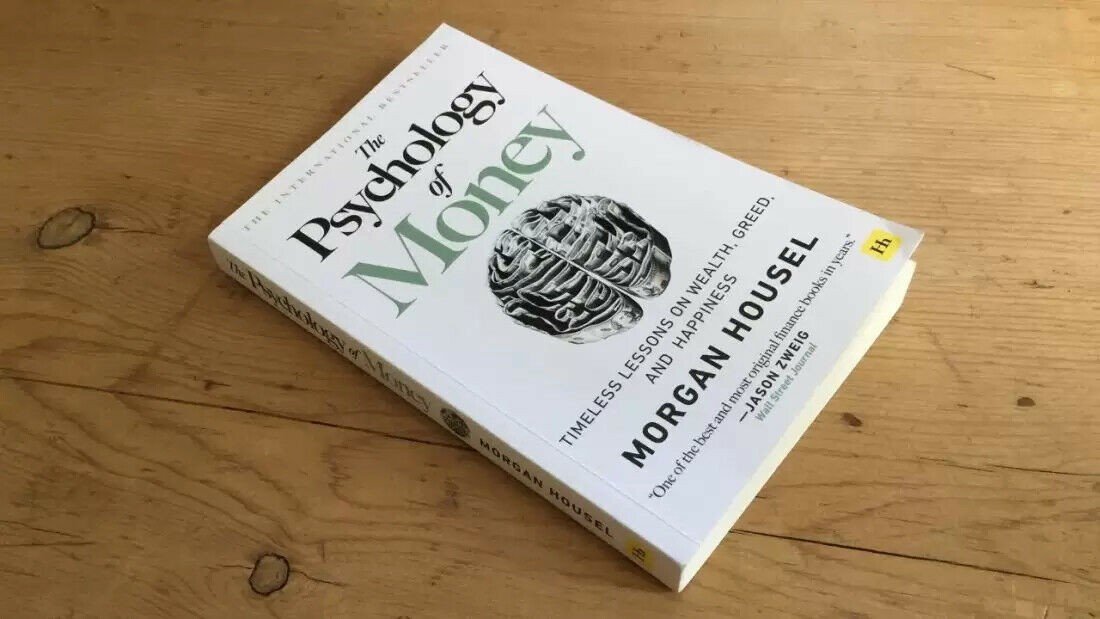
The Psychology of Money: Why Your Behavior Matters More Than Your Math
Morgan Housel's "The Psychology of Money" isn't a typical finance book. It doesn't teach you complex investment strategies or stock analysis. Instead, it reveals something far more powerful: your relationship with money is shaped by psychology, not by formulas.
The core insight is simple yet revolutionary: how you behave with money matters infinitely more than how smart you are about money. You can know all the right financial moves, but if your psychology works against you, you'll fail. Conversely, ordinary people with sound behavior often build extraordinary wealth.
Key Idea #1: Everyone Has a Different Money Story
Your relationship with money was formed long before you earned your first dollar. It came from watching your parents, your culture, your generation, and your unique experiences.
Someone who grew up during the Great Depression will never think about money the same way as someone born in 2000. A person who lost everything in a market crash won't take financial risks the way someone who only knew prosperity will. There's no single "right" way to do money - only the way that works for your psychology.
This is why personal finance is so personal. Financial advice that works for one person can be toxic for another. You must design your financial life around your behavior, not around theoretically optimal returns.
Apply This: Before following any financial advice, ask yourself: "Does this align with my values and comfort level?" If a strategy causes you constant anxiety, it's not the right strategy for you, no matter how logical it is.
Key Idea #2: Luck and Risk Are Not Always Visible
We tend to attribute success to skill and failure to bad luck - until we fail. Then suddenly, we claim it was bad luck all along.
The truth is more nuanced: luck and risk are everywhere, and they're impossible to predict. Bill Gates succeeded partly because he was brilliant, but also because he was born in Seattle when microcomputers emerged. He had access to computers at his school when most kids didn't. That's luck disguised as destiny.
The lesson: Be humble about your wins and skeptical of others who claim they have it all figured out. The person bragging about their investment returns might have just been lucky. The company that failed might have had brilliant leaders - they just ran into bad luck.
Apply This: Don't let overconfidence destroy you. Save money. Build an emergency fund. Own your decisions knowing that unpredictable things happen. Success isn't just about making good choices; it's about surviving the random bad luck that hits everyone.
Key Idea #3: Wealth Is What You Don't Spend
Rich people look rich. Wealthy people don't.
This is the difference between income and wealth. You can earn $500,000 a year and be broke. You can earn $50,000 a year and be wealthy. The difference? What you don't spend becomes wealth. Spending is a choice. Income is luck.
A high income doesn't make you rich. It just gives you the option to become rich if you don't blow it on lifestyle inflation.
Apply This: Stop measuring yourself against others. Your neighbor's fancy car is financed. Their house might be mortgaged to the max. You don't know their financial situation, so stop trying to match their spending. Build wealth by spending less than you earn and investing the difference - boring, but it works.
Key Idea #4: Tails, You Win; Heads, You Don't Lose Much
The best investment strategy isn't about chasing the highest returns. It's about staying in the game long enough for the big wins to find you.
In investing and in life, a few big wins can make up for many small losses. If you stay invested, you'll catch the 10 best days in the market. But if you panic and sell, you'll miss them. Those 10 days might make the difference between retiring comfortably and working until you're 80.
Apply This: Consistency beats perfection. You don't need to time the market or pick winners. Just invest regularly, keep your costs low, and stay the course. The people who win at money are usually the boring people who don't get caught up in the excitement.
Key Idea #5: Enough Is Underrated
There's a concept called "enough." It's the point where more money stops making you happier and starts making you miserable.
Many people never define what "enough" means to them. They chase more and more, always feeling like they're behind. This is exhausting. A billionaire who still feels poor has a serious problem.
Apply This: Define your number. How much money do you need to live the life you want? Once you know that number, you can relax. You can stop constantly comparing yourself to others. You've won the game. Now you can just enjoy it.
The Bottom Line
The Psychology of Money teaches you one fundamental truth: financial success isn't about being the smartest person in the room. It's about controlling your behavior, understanding your psychology, and making consistent choices over decades.
Stop trying to get rich fast. Start trying to stay rich slow. Build discipline, define your "enough," and let time do the work. That's the psychology of money.
Follow @bookfocus_ on Instagram for daily lessons from the best self-improvement books.
Comments 0
Loading comments...
No comments yet
Be the first to share your thoughts on this article!